
Cloudflared Tunnel: Network for Outbound-Only Traffic
By Xavier Collantes
11/25/2025

The Problem: Exposing Your Server to the Internet
If you are like me and work with Raspberry Pis and home lab projects regularly,
you have probably faced this dilemma: How do you make your applications and APIs
accessible without exposing your entire home network (or any network, for that
matter) to the open internet?
For the longest time, I struggled with this challenge. Opening ports and using a
traditional NGINX reverse proxy felt like leaving my front door wide open. Sure,
it worked, but the security vulnerabilities left too many potential entry points
for attacks.
My Experience with Ngrok (and Why I Needed Something Better)
My next consideration was ngrok, a popular tunneling solution that is a standard
tool for developers to quickly expose local services to the internet. It solves
the security problem elegantly by creating secure tunnels to your local
services. However, there was one significant roadblock: cost. For the number of
projects I was running and the flexibility I needed, the paid tiers added up
quickly. I needed something equally powerful but more accessible for my use
case.
Enter Cloudflare Tunnel: The Perfect Solution
That is when I discovered Cloudflare Tunnel (or as its library,
cloudflared), and it completely transformed how I deploy my Raspberry Pi
applications. It checked every box:- No subscription fees for basic tunneling needs
- Lightweight daemon that just works
- Backed by Cloudflare's global network
How Cloudflare Tunnel Works
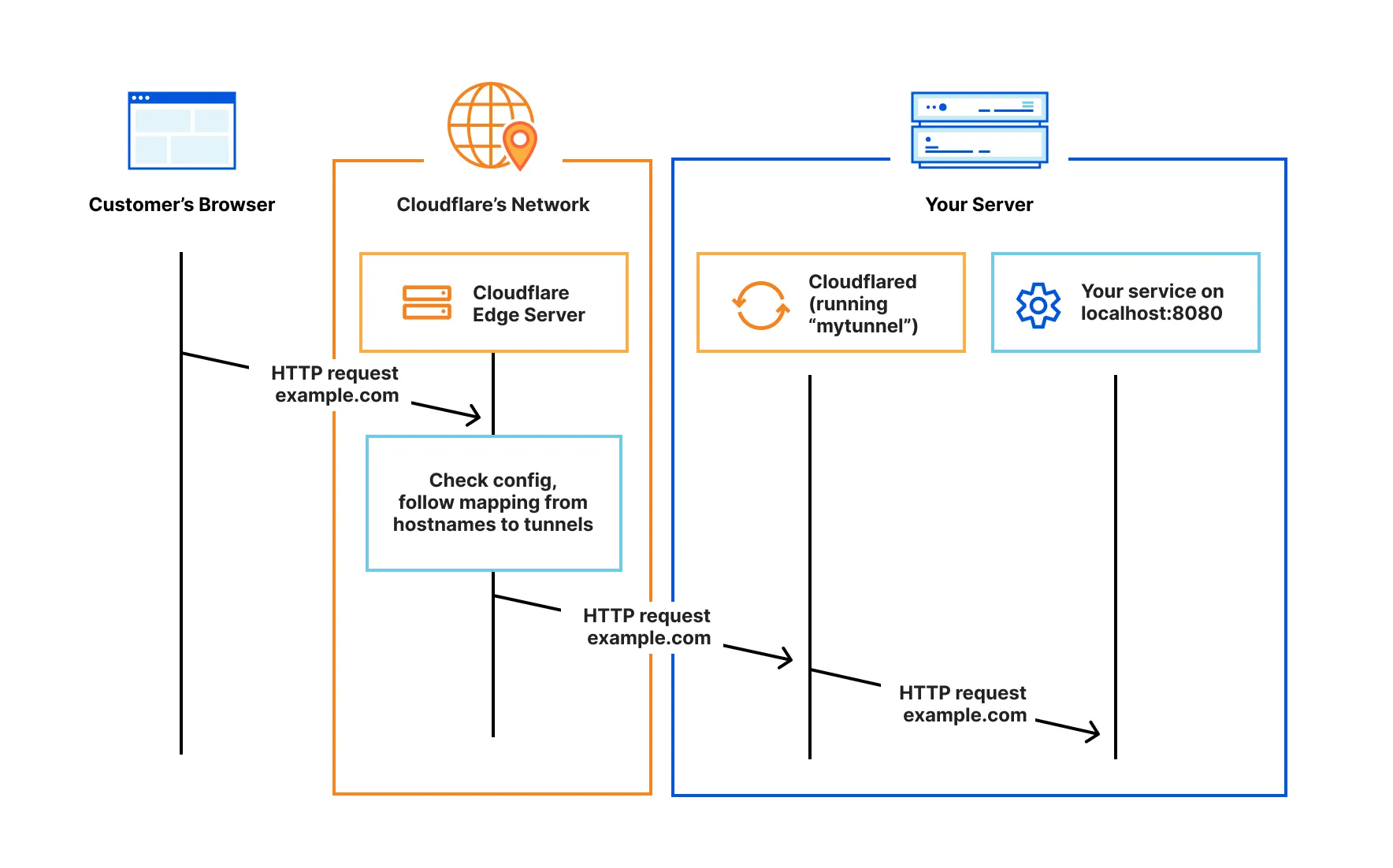
Cloudflare Tunnel provides a secure way to connect your resources to Cloudflare
without exposing them directly to the internet. Here's what makes it different:
Outbound-Only Connection Model
Instead of opening inbound ports, the
cloudflared daemon on your server
creates outbound-only connections to Cloudflare's global network. Since most
firewalls allow outbound traffic by default, this means:- No firewall configuration nightmares
- No port forwarding required
- No public IP address needed
- Your server remains hidden from the internet
Once the connection is established, traffic flows through the secure tunnel. All
requests to your application are routed through Cloudflare first, providing an
additional layer of protection and DDoS mitigation.
Key Features
1. Multiple Protocol Support Cloudflare Tunnel isn't just for HTTP web
servers. You can securely expose:
- HTTP/HTTPS web applications
- SSH servers for remote access
- Remote desktop connections (RDP)
- Other TCP/UDP protocols
2. The Cloudflared Daemon This lightweight server-side daemon is the heart
of the system. It runs on your infrastructure (whether that is a Raspberry Pi, a
VPS, or an on-premises server) and maintains persistent connections to
Cloudflare's network. Multiple
cloudflared processes can connect to the same
tunnel, providing redundancy and load balancing.3. DNS Integration Tunnels route traffic to DNS records, making it seamless
to connect your domain to your private server. No complex networking knowledge
required—just point your DNS records at the tunnel, and Cloudflare handles the
rest.
4. Zero Trust Architecture Since traffic flows through Cloudflare's network,
you can layer on additional security policies, access controls, and
authentication mechanisms. Your origin server only accepts connections from
Cloudflare, blocking everything else by default.
My Experience: From Setup to Production
Setting up my first Cloudflare Tunnel took less than 15 minutes. I installed
cloudflared on my Raspberry Pi, authenticated it with my Cloudflare account,
created a tunnel through the dashboard, and configured which services to expose.
That's it.Now I run multiple projects—from home automation APIs to personal web
applications—all served securely through Cloudflare Tunnel. My home network
remains locked down, with zero open ports, and I sleep better knowing that
Cloudflare's infrastructure sits between the internet and my Raspberry Pi.
Why This Matters for Your Projects
Whether you are:
- Running IoT devices that need external access
- Hosting personal projects from home
- Building applications that need secure, reliable connectivity
Cloudflare Tunnel offers a production-ready solution without the complexity or
cost of traditional approaches.
Further Reading
Related Articles
Related by topics:
cloud
infrastructure
devops
networking